327 Central Park West (Suite 1A), New York, NY 10025


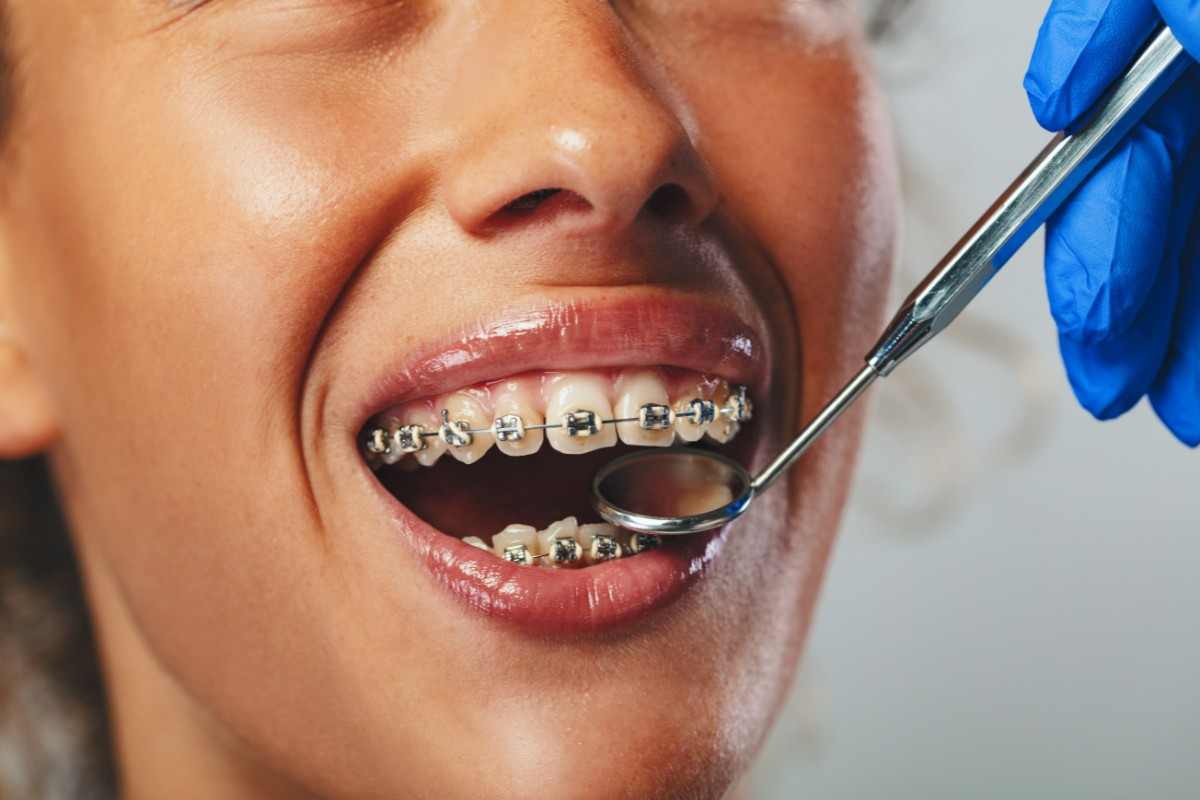
Yes, complex orthodontic cases can be treated discreetly. Clarity™ ADVANCED ceramic braces deliver the same fixed-bracket force that severe misalignments need, while looking nearly invisible against your natural teeth. That’s the short answer for anyone who’s been told their case is “too complex” for clear aligners but still doesn’t want a mouth full of visible metal. The longer answer is more interesting, because this system solves a problem that’s frustrated orthodontic patients for years: needing serious structural correction without sacrificing how your smile looks throughout treatment.
For a long time, patients with severe misalignment faced a frustrating trade-off. Clear aligners looked great but couldn’t always handle the heavier mechanical demands of a complicated bite. Traditional metal braces could handle almost anything but came with the visibility that so many adult and teen patients try to avoid, especially in professional or social settings where confidence matters day to day. Ceramic bracket technology has closed that gap considerably, and at Central Park West Orthodontics, the latest generation of this system takes it even further.
What Clarity™ ADVANCED Ceramic Braces Actually Are
These are low-profile brackets made from a translucent, fine-grained ceramic that picks up the natural color of the tooth underneath, so they blend in rather than stand out. Older ceramic brackets had a reputation for being bulky and fragile, prone to cracking under normal biting pressure. This newer polycrystalline version is injection-molded into a much smaller, smoother bracket that solves both problems; it’s stronger and far less noticeable. The rounded edges also mean less friction against your lips and cheeks, which translates to a gentler adjustment period than older ceramic or metal systems.
What makes the material genuinely different is how it’s manufactured: rather than being cast as a single fragile block, the polycrystalline ceramic is injection-molded under controlled conditions, which produces a denser, more uniform structure. That density is what allows the bracket to be shrunk down without losing strength a balance older ceramic materials struggled to achieve. The end result is a bracket that a dentist can bond confidently for demanding cases, while a patient barely notices it’s there in day-to-day conversation or photos.
Why Severe Misalignment Usually Needs Fixed Brackets
Clear aligners are excellent for mild-to-moderate crowding or spacing, but they’re not built for every kind of movement. Severe rotations, deep bite discrepancies, and impacted teeth often require continuous, multi-directional force something only a wire-and-bracket system can consistently apply. Correcting a tooth’s position in three dimensions (shifting the whole tooth and root together, rotating it, or pulling it into place) takes mechanical leverage that removable trays simply don’t generate as reliably. Research compiled by the National Center for Biotechnology Information estimates that a majority of the U.S. population has some degree of malocclusion, and a meaningful portion of those cases need this kind of precise, bodily tooth movement exactly where fixed appliances outperform aligners.
Aligners work by applying gentle, incremental pressure through a series of trays, which is ideal for tipping teeth gradually into position. But tipping isn’t the same as bodily movement or root torqueing, and severe cases often need exactly that kind of leverage to avoid relapse down the line. Fixed brackets stay engaged with the tooth around the clock, applying steady force that doesn’t depend on how consistently a patient wears a removable tray. For anyone whose case involves significant crowding, impacted teeth, or a complicated bite, that continuous engagement is often the difference between a treatment plan that works predictably and one that stalls out halfway through.
How This Fits Into a Busy City Lifestyle
Choosing fixed brackets doesn’t mean putting your daily routine on hold. Between morning coffee runs, client meetings, and dinners out, the last thing you want is an appliance that draws attention every time you talk or smile. The stain-resistant ceramic material holds up well against coffee, tea, and everyday meals, so the brackets stay clear and inconspicuous for the full length of treatment. You’ll still want to avoid hard or sticky foods to protect the brackets themselves, but discoloration isn’t something you have to worry about.
This matters more in a city built around constant face-to-face interaction. Video calls, client-facing meetings, dinners with friends, first dates these are all situations where a mouth full of visible metal can feel like it’s competing for attention with everything else you’re trying to communicate. Ceramic brackets let you keep showing up fully present in those moments, without treatment becoming something you’re managing around your social calendar. It’s a small shift, but for many patients considering braces in New York, it’s the reason they finally commit to fixing a complex case they’d been putting off for years.
The Clinical Advantages Worth Knowing About
A few engineering details set this system apart from older ceramic options:
- Strong bonding – an anatomically shaped base with a specialized bonding agent keeps brackets firmly anchored, cutting down on emergency repair visits.
- Stain resistance – the dense ceramic structure blocks pigments from coffee, tea, and sauces from soaking in
- Clean removal – a built-in stress-release notch lets your orthodontist take the brackets off cleanly at the end of treatment, without stressing your enamel.
Because the brackets rarely fail structurally, patients tend to get a more predictable treatment timeline overall, with fewer surprise adjustments along the way.
What to Expect During the Consultation Process
Every complex case starts with a detailed diagnostic evaluation, typically digital scans and imaging that map out exactly how your teeth and jaw are positioned in three dimensions. This step matters more for complicated cases than straightforward ones, since the treatment plan needs to account for rotations, bite depth, and any impacted teeth before a single bracket goes on. From there, your orthodontist can walk you through realistic timelines, what the early adjustment period will feel like, and how the ceramic system compares to your other options given your specific anatomy.
Patients considering this route often want to know how daily maintenance changes compared to metal braces. The honest answer is: not much. Brushing around each bracket with a soft-bristled brush, flossing daily with an orthodontic flosser, and keeping up with regular adjustment visits are all still part of the routine. The bigger difference shows up in the mirror, not in the maintenance schedule. If you’re comparing providers, it’s worth choosing an orthodontist in New York with specific experience managing complex ceramic bracket cases, since not every practice offers the same level of familiarity with this system.
As one happy patient shared —
this place is amazing! I got braces here and they did a fantastic job! I am so happy to call this Dr. Eva my orthodontist! Thank you so much, CPW orthodontists, for everything – P. Sheer
We invite you to read our Google reviews and hear directly from patients who have trusted us with their smiles.
Who Should Consider This Option
If you’ve been told your case is too complex for Invisalign, or you simply want a fixed system that’s far less visible than traditional metal, this is worth bringing up at your next consultation. It’s especially well-suited for patients dealing with severe bite discrepancies, heavy crowding, or rotated teeth who still want to move through treatment without feeling self-conscious in professional or social settings. It’s also a strong option for anyone who previously started aligner treatment and hit a wall — cases where trays alone couldn’t finish the job sometimes need exactly this kind of fixed-bracket follow-through to reach a stable, lasting result.
No two cases look identical, which is why a one-size-fits-all recommendation rarely works well in orthodontics. A proper evaluation takes into account your bite, your crowding pattern, your lifestyle, and how much time you’re realistically able to commit to appointments and adjustments. That’s the only reliable way to know whether ceramic brackets, traditional metal, aligners, or some combination of approaches will get you to a stable result in the least amount of time. At Central Park West Orthodontics, our team specializes in exactly this kind of complex case planning — book a consultation today to find out if Clarity™ ADVANCED ceramic braces are the right fit for your smile.
Frequently Asked Questions
- Do ceramic braces stain easily from food and drinks?
The ceramic brackets themselves resist staining well, though the clear elastic ties holding the wire can pick up some discoloration and are simply swapped out at your routine adjustments. - Are ceramic brackets more painful than traditional metal braces?
No, they apply comparable pressure using the same mechanical principles, and many patients actually find the smooth, low-profile edges more comfortable than older bracket designs. - Can ceramic braces treat severe overbites and underbites?
Yes, they deliver the same continuous mechanical force as metal brackets, making them a solid option for complex bite corrections, not just cosmetic adjustments. - How long does treatment with this system usually take?
It depends on the complexity of your case, but most treatment plans run somewhere between 12 and 24 months, with a precise estimate given after your initial evaluation. - Are ceramic brackets prone to breaking during daily wear?
Older ceramic systems had that reputation, but the advanced polycrystalline material used today holds up well under normal biting and chewing forces. - How do I choose the right provider for complex ceramic bracket treatment?
Look for an orthodontist in New York with specific experience treating severe misalignment cases, not just routine or cosmetic ones. Complex cases benefit from a provider who regularly works with fixed-bracket systems like this one.